Free shipping for orders over 499 riyal


Quick answer: AdBlue is a solution of 32.5% high-purity urea and deionized water. It is sprayed into the exhaust of diesel vehicles fitted with an SCR system to turn harmful nitrogen oxides into nitrogen and water vapor. The car's computer is programmed to block an engine restart once the AdBlue tank is empty, so the vehicle stays emissions-compliant, which is why your car can refuse to start with a full diesel tank. The fix is simple: refill before you hit zero, and only use fluid that meets ISO 22241.
What is AdBlue?
AdBlue (also known as DEF or AUS 32) is not a fuel and not a diesel additive. It is a clear, high-purity fluid that goes into its own tank, usually with a blue cap. It consists of:
- 32.5% high-purity urea.
- 67.5% deionized water.
That ratio is not random: the system's sensors measure the fluid's quality and concentration, and any wrong ratio or contamination shows up as faults and warnings.
Which vehicles use AdBlue?
You will mostly find it on modern European diesels (Euro 6), modern trucks and buses, and some diesel pickups and SUVs depending on the specification they were built to. Many diesel vehicles built for the Gulf market have no SCR system, so check your owner's manual or look for a tank with a blue cap marked AdBlue.
How does the SCR system work with AdBlue?
- Once the exhaust reaches operating temperature, the AdBlue injector sprays precisely metered amounts into the exhaust pipe ahead of the SCR catalyst.
- The heat breaks the urea down into ammonia (NH3).
- Inside the SCR catalyst, the ammonia reacts with the nitrogen oxides (NOx) produced by diesel combustion.
- The result is nitrogen (N2) and water vapor (H2O), both harmless.
NOx sensors before and after the catalyst monitor how well the reaction is working, and any fault turns on the engine light. To understand that light, read our guide to dashboard warning lights and Check Engine.
What happens when AdBlue runs out?
Modern systems are programmed so the vehicle cannot keep running for long without treating its emissions. Details vary by manufacturer, but the usual sequence is:
- Early warning: a dashboard message asks you to refill and shows the remaining range. In many cars it starts with roughly 2,000–2,400 km left.
- Repeated, more urgent warnings: as the range drops. Some vehicles may also reduce engine power or top speed.
- Restart prevented: when the tank reaches zero, the engine usually keeps running until you switch it off, but the computer will refuse to restart it until enough AdBlue has been added. Some vehicles need a set minimum amount (several liters) or a reset with a diagnostic tool.
Practical tip: don't ignore the first message, especially before an intercity trip. A 10-liter jug in the trunk is enough to avoid getting stranded on the highway.
Costly mistakes with AdBlue
- Pouring AdBlue into the diesel tank: do not start the car at all. The fluid damages the fuel pump and injectors, and the tank needs to be drained and the fuel system cleaned by a specialist. The reverse (diesel in the AdBlue tank) ruins the sensors and the injector and can damage the catalyst.
- Using plain water: minerals in tap water cause deposits and clog the AdBlue injector, and the quality sensors detect the wrong concentration, triggering faults or a start block.
- Unknown or non-compliant fluid: fluid that does not meet ISO 22241 may contain impurities that speed up crystallization and clog lines and the injector. It is the same problem as counterfeit oil, which we cover in our article on the dangers of fake oils and filters.
- Mixing anything into AdBlue: the standard calls for pure fluid, and manufacturers warn against adding any substance to it. Crystallization is dealt with by cleaning the injector and lines, not by mixing products into the tank.
- Storing it in sun and heat: urea slowly breaks down at high temperatures, shortening the fluid's life. Keep jugs in a cool, shaded place and use them within a reasonable time after opening, which matters a lot in a Saudi summer.
Comparison: correct use vs. bad practices
Aspect | Correct use | Bad practices |
Fluid type | AdBlue meeting ISO 22241 | Plain water, unknown fluid, or fluid mixed with additives |
Vehicle behavior | Normal operation with no warnings | Warning messages, possible power loss or start block |
NOx sensors and SCR catalyst | Longer life, fewer faults | Damaged sensors and clogged injector, with high repair costs |
Crystals and deposits | Limited and handled by maintenance | White crystals clogging the injector and lines |
Storage | Shaded place, tightly closed container | In the sun, or opened containers left for a long time |
How much AdBlue does a car use?
Consumption depends on the engine, driving style and load. Passenger cars typically use roughly one to two liters per 1,000 km, and trucks and heavy-duty driving use more. The most accurate guide is always your car's remaining-range display and the owner's manual.
AdBlue system service at the CarBoost center
- Refill with compliant fluid: high-purity AdBlue that meets ISO 22241.
- Diagnostic scan: reading SCR fault codes and NOx sensor data, and resetting the system after refilling when needed.
- Cleaning the AdBlue injector and lines: removing deposits and crystals for an even spray.
- Checking the whole exhaust system: because DPF and SCR problems are linked. Learn more in our guide to protecting the catalytic converter and DPF.
Recommended products from CarBoost
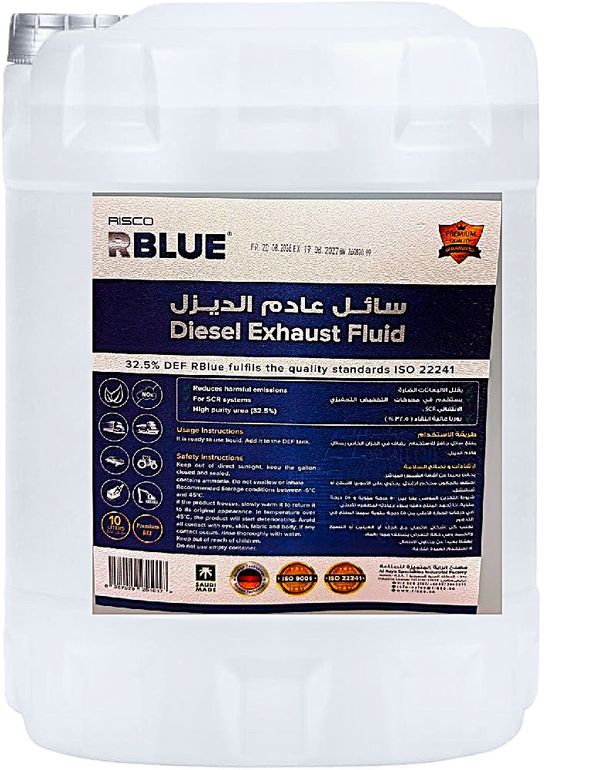
- RESCO AdBlue 10L
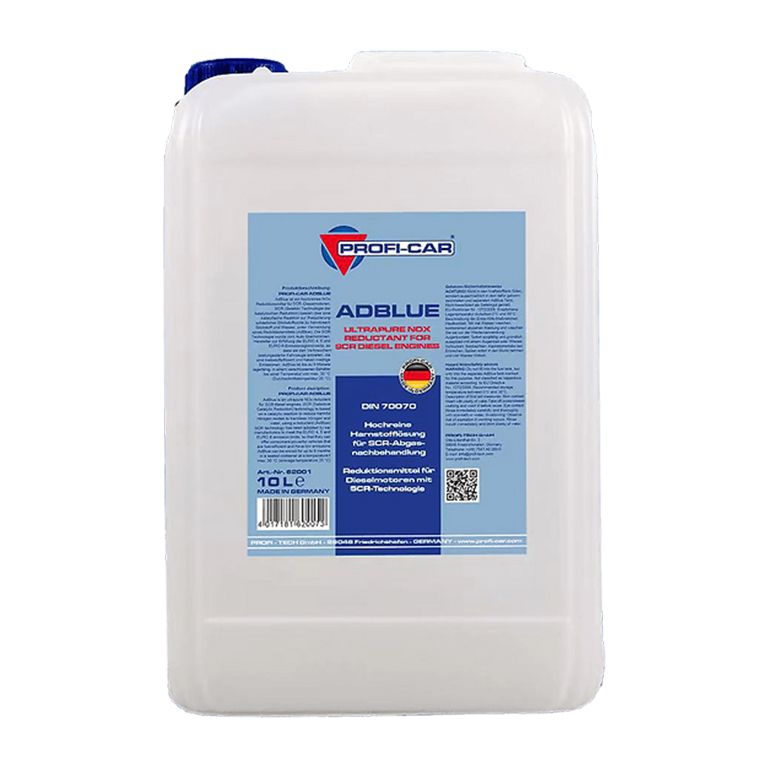
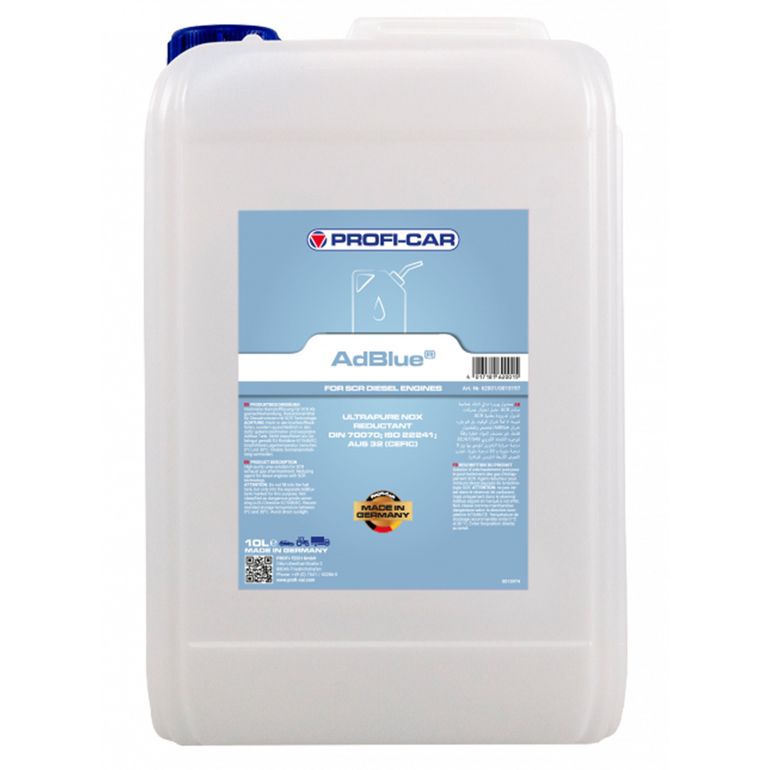
- Profi-Car AdBlue 10L (Germany)
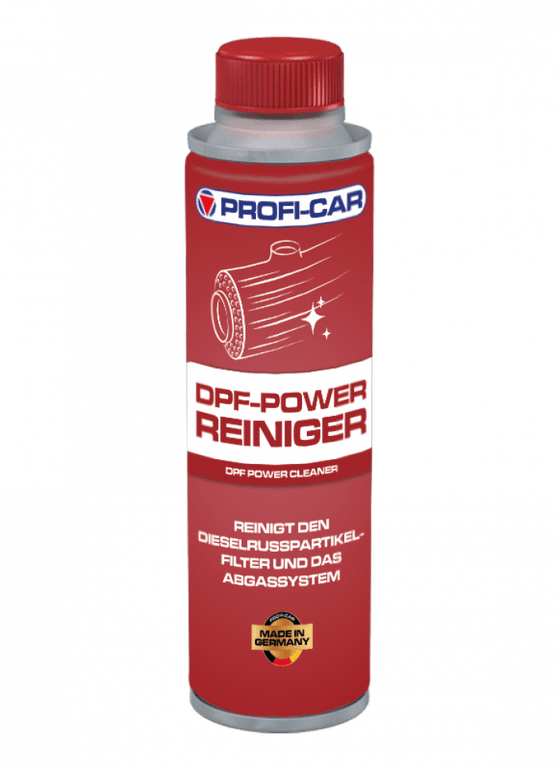
- Profi-Car DPF Power Cleaner
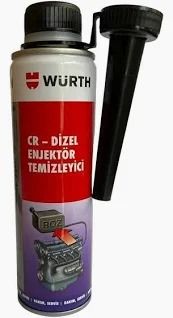
- Wurth Diesel Injector Cleaner
- Diesel engine products
- DPF cleaners
FAQ
Can I drive without AdBlue?
Only for a limited distance after the warning. Once the tank is empty, most vehicles block a restart after you switch off the engine, so don't push your luck and refill early.
Can I use distilled water instead of AdBlue temporarily?
No. The quality sensors detect the missing urea, faults will appear and the engine may be blocked from starting, on top of the risk of deposits. Use only AdBlue that meets ISO 22241.
How long does AdBlue last?
It depends on storage temperature. In a cool, shaded place a sealed container usually lasts about a year, and less the hotter it gets. Check the production date on the container and avoid leaving it in the car in the sun for long periods.
📲 Share this article with anyone who drives a diesel car or truck. It could save them from getting stranded!
🔧 CarBoost is here for you: Shop AdBlue and diesel care products in our diesel engines section, or book an exhaust and AdBlue system check at the CarBoost center.