Free shipping for orders over 499 riyal


Quick answer: Choose your car battery by three criteria: (1) the type the manufacturer requires: AGM for premium cars and advanced Start-Stop systems, EFB for basic Start-Stop systems, and a standard battery for simpler cars. (2) Capacity in amp-hours (Ah) and cranking power (CCA) equal to the original battery or slightly higher. (3) The size and terminal position that match the battery tray. In many modern cars, the new battery must also be registered in the car's computer after fitting.
Imagine replacing the battery in your modern car with a brand-new one, and a few months later the automatic Start-Stop system stops working, warning messages appear on the dashboard, and then the battery dies. This scenario is common, and the cause is usually not a manufacturing defect but fitting a battery type that doesn't match the car's requirements, or not registering it with the power management system.
How many amp-hours does your car battery need?
Vehicle class | Typical capacity | Usual type |
Small cars (compact sedans and hatchbacks) | 45 – 60 Ah | Standard, or EFB with Start-Stop |
Mid-size cars (Camry, Sonata, Accord) | 60 – 75 Ah | Standard or EFB depending on model |
SUVs, 4x4s and premium cars | 75 – 105 Ah | AGM on most European and recent models |
These are approximate figures; the correct number is printed on your current battery or in the owner's manual. A slightly higher capacity is fine if the size fits, while a lower one shortens battery life and can cause electrical faults. Also pay attention to CCA (cold cranking amps): equal to or higher than the original means easier starting.
Why do batteries fail faster in Saudi Arabia?
High heat speeds up chemical wear inside the battery and increases fluid evaporation in standard batteries, so battery life here may be roughly two to three years instead of four or five in milder climates. Short trips with the A/C on full also don't give the battery enough time to recharge. Check your battery before summer and before long trips.
What is Start-Stop and why does it strain the battery?
The automatic Start-Stop system switches off the engine when you stop in traffic or at a light, then restarts it as soon as you lift your foot off the brake, to cut fuel use and emissions. While the engine is off:
- The alternator stops charging.
- All electrical loads (A/C blower, screens, lights, control units) rely on the battery alone.
- The car needs high cranking current to restart the engine many times on a single trip.
This means the battery spends most of its time partially charged, with repeated discharge and recharge cycles, which a standard battery was not designed for.
Battery types: standard, EFB and AGM
Standard flooded battery (lead-acid)
- Technology: Lead plates immersed in sulfuric acid solution.
- Suits: Cars without Start-Stop or high electrical loads.
- Drawbacks: Poor tolerance of repeated discharge cycles, and more affected by heat and vibration.
EFB battery (Enhanced Flooded Battery)
- Technology: An improved flooded battery whose plates are wrapped in a polyester scrim that reduces shedding of active material, along with plate improvements.
- Suits: Basic Start-Stop cars and moderate electrical loads.
- Advantages: Handles roughly twice the charge and discharge cycles of a standard battery according to manufacturer data, at a mid-range price.
AGM battery (Absorbed Glass Mat)
- Technology: The acid is fully absorbed in glass fiber mats compressed between the plates, so there is no free liquid.
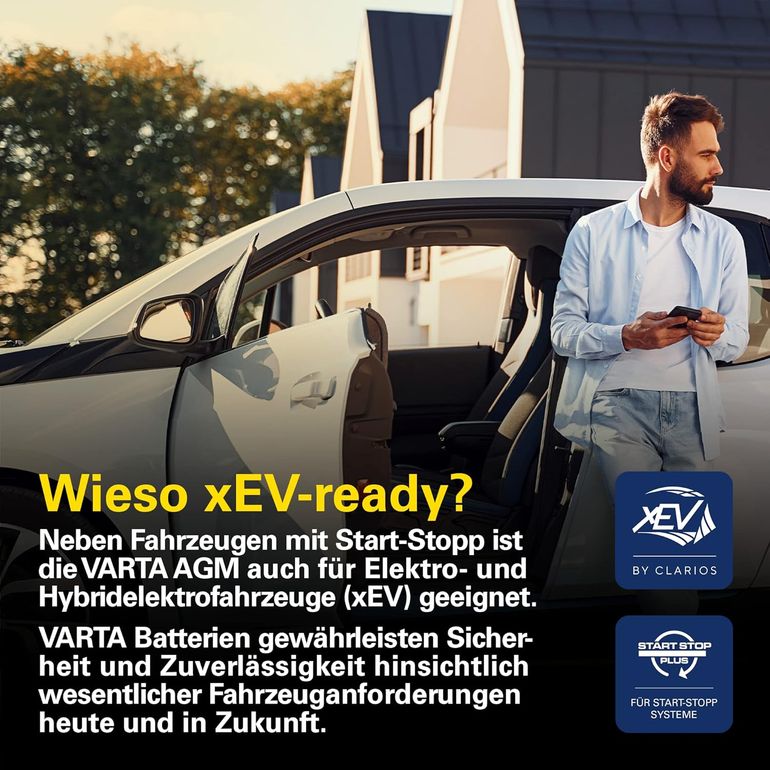
- Suits: Premium cars, advanced Start-Stop systems, cars with regenerative braking, and cars with high electrical loads.
- Advantages: Far higher cycle tolerance than standard batteries (manufacturers quote up to three times or more), faster charge acceptance, good vibration resistance, and no acid leakage in normal use because it is sealed.
Quick comparison of battery types
Comparison | Standard | EFB | AGM |
Start-Stop support | No | Yes (basic systems) | Yes (advanced systems) |
Discharge cycle tolerance | Low | Medium (about twice standard) | Very high |
Charge acceptance | Slow | Medium | Fast |
Vibration and leak resistance | Lower | Medium | High, fully sealed |
Price | Economical | Mid-range | Higher |
The upgrade rule: You can upgrade from standard to EFB, or from EFB to AGM (updating the battery type in the computer if the car requires it), but never downgrade from AGM to EFB or standard.
What happens if you fit a standard battery in a Start-Stop car?
- Rapid battery failure, possibly within months, due to strain and repeated discharge.
- Start-Stop stops working because the computer decides the battery's condition doesn't allow switching off the engine.
- Warning messages and odd electrical faults due to low voltage, which can affect screens, sensors and the transmission, as explained in how a weak battery affects the gearbox.
- Extra strain on the alternator as it tries to compensate for an unsuitable battery.
Why must a new battery be registered?
Many modern cars, especially European ones and some recent Japanese and Korean models, have a battery management system (BMS) with a sensor on the negative terminal that monitors battery condition and adjusts charging voltage according to its age.
A note from CarBoost technicians: If a new battery is fitted without registering it using a scan tool, the computer keeps treating it as the old worn-out battery and charges it with the wrong strategy. This can lead to overcharging or undercharging, a shorter battery life and a disabled Start-Stop system.
At the CarBoost Center, we fit a battery that matches your car's specifications, register it and set its type and capacity in the computer when needed, and check the charging system and alternator. If the battery light comes on in your dashboard, see our dashboard warning lights guide to understand what it means.
Tips to extend battery life
- Check battery voltage and condition periodically, especially before summer. A healthy battery reads about 12.6 volts with the car off.
- Clean corrosion off the terminals and make sure they are tight.
- If the car will sit for weeks, use a maintenance charger or disconnect the negative terminal (bearing the car's systems in mind).
- Include electrical checks in your periodic maintenance program.
Recommended products from CarBoost
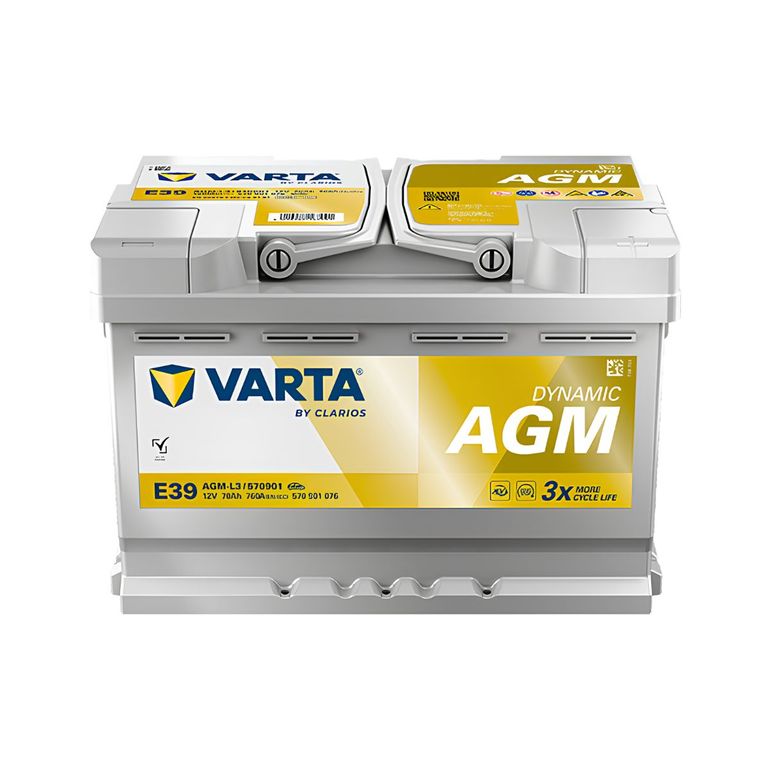
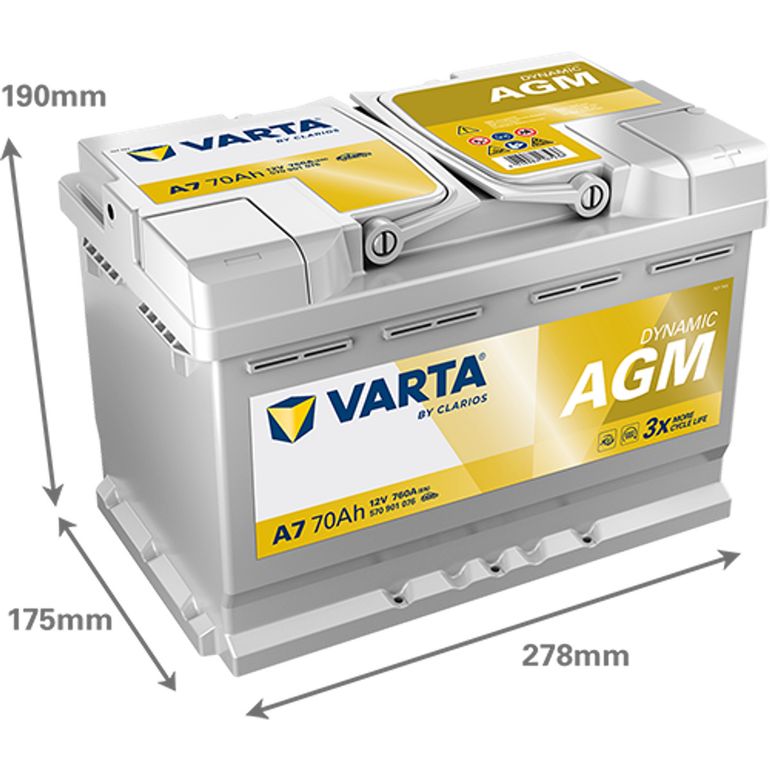
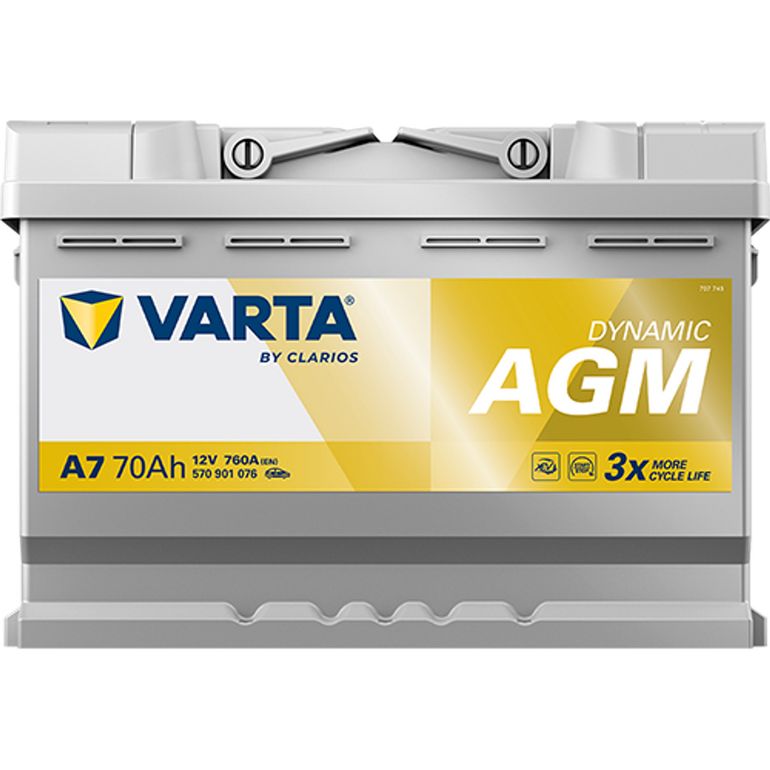
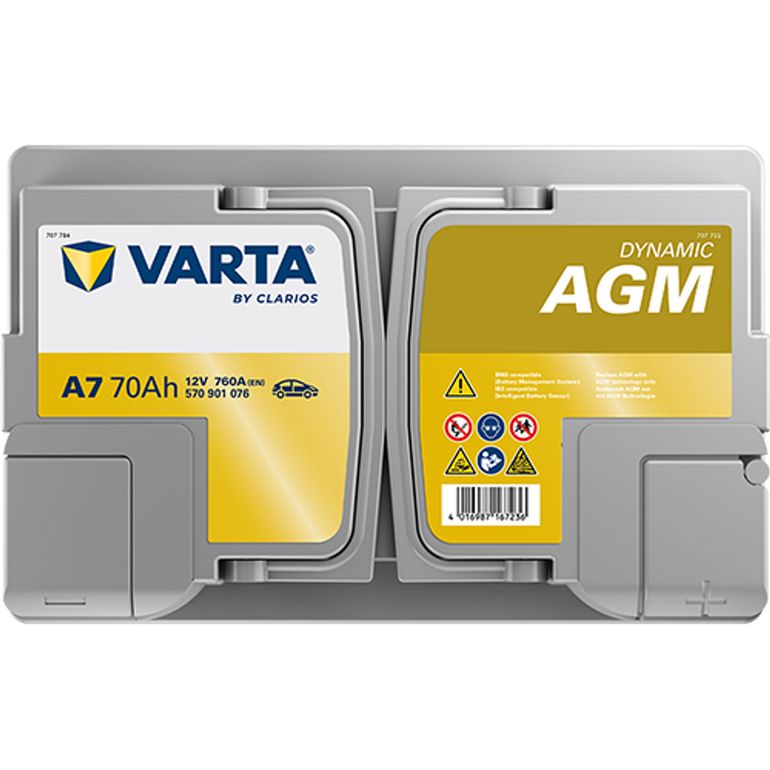
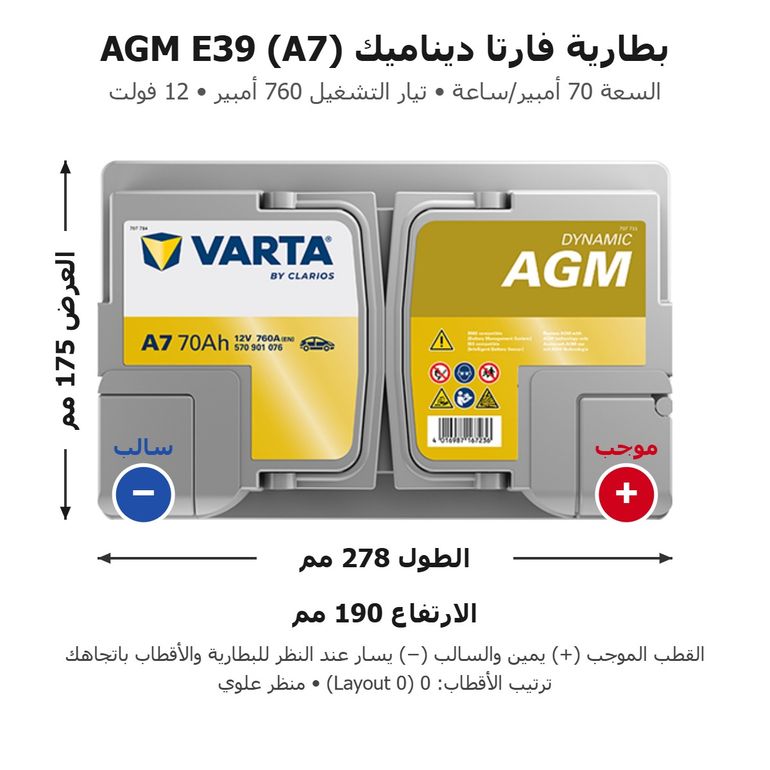
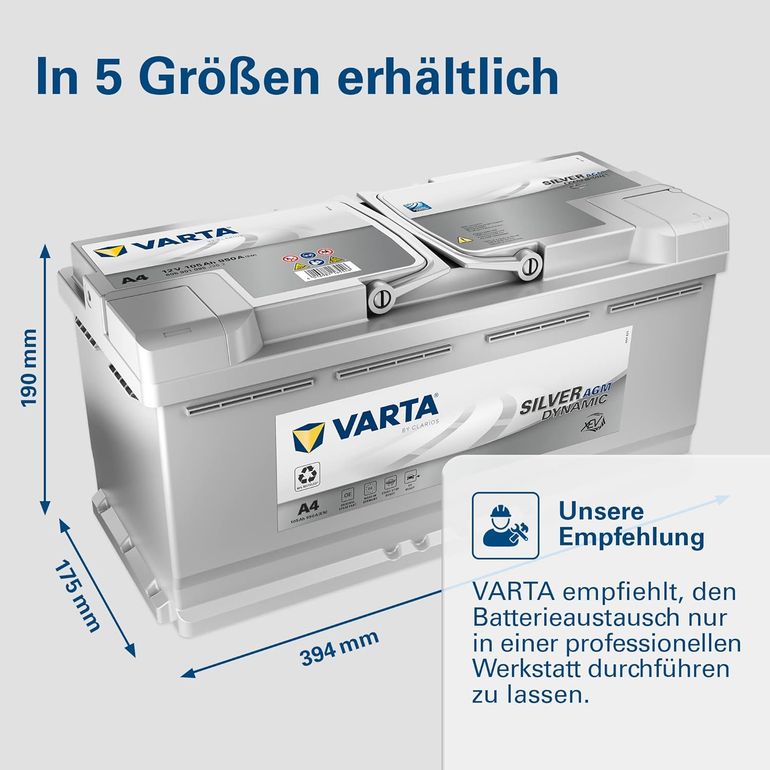
- VARTA Dynamic AGM E39 – 70Ah
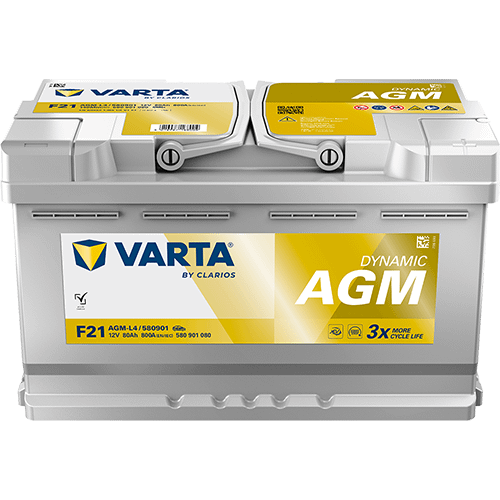
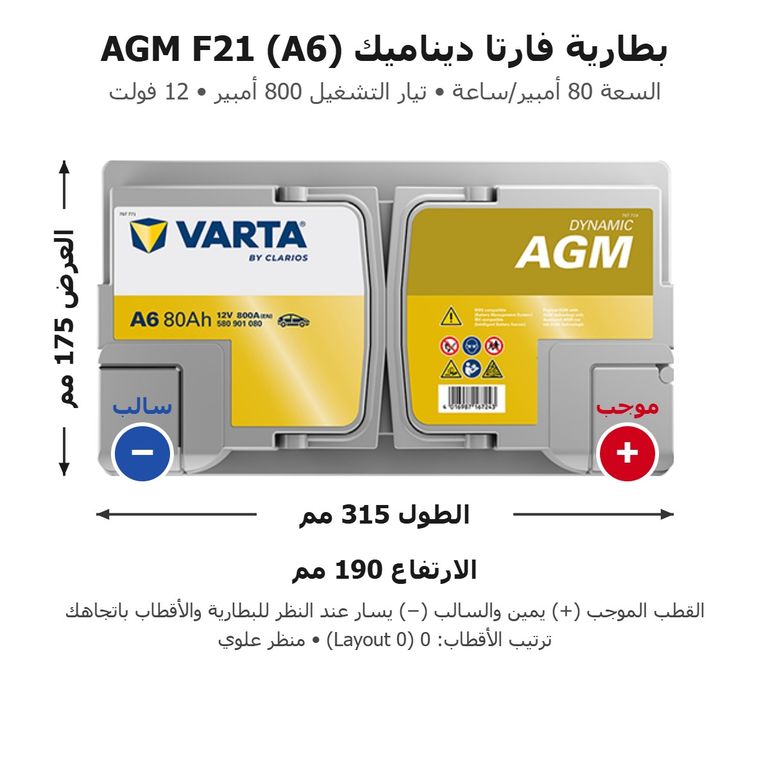
- VARTA Dynamic AGM F21 – 80Ah
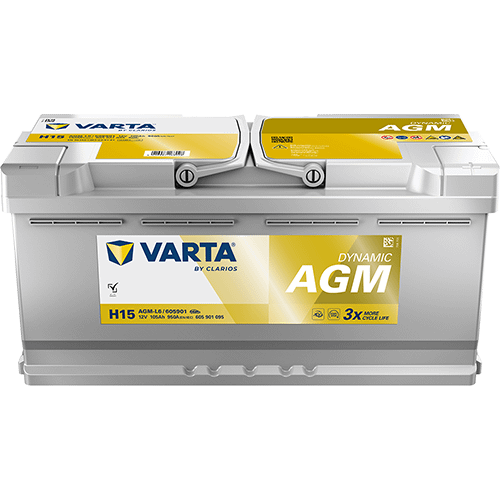
- VARTA Dynamic AGM H115 – 105Ah
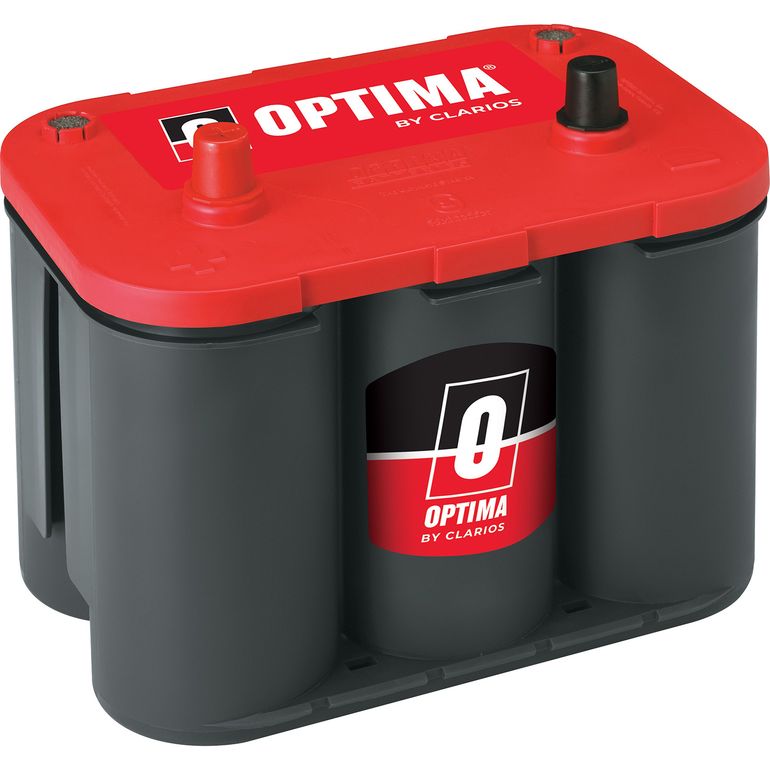
- OPTIMA AGM RTS 4.2 – 50Ah
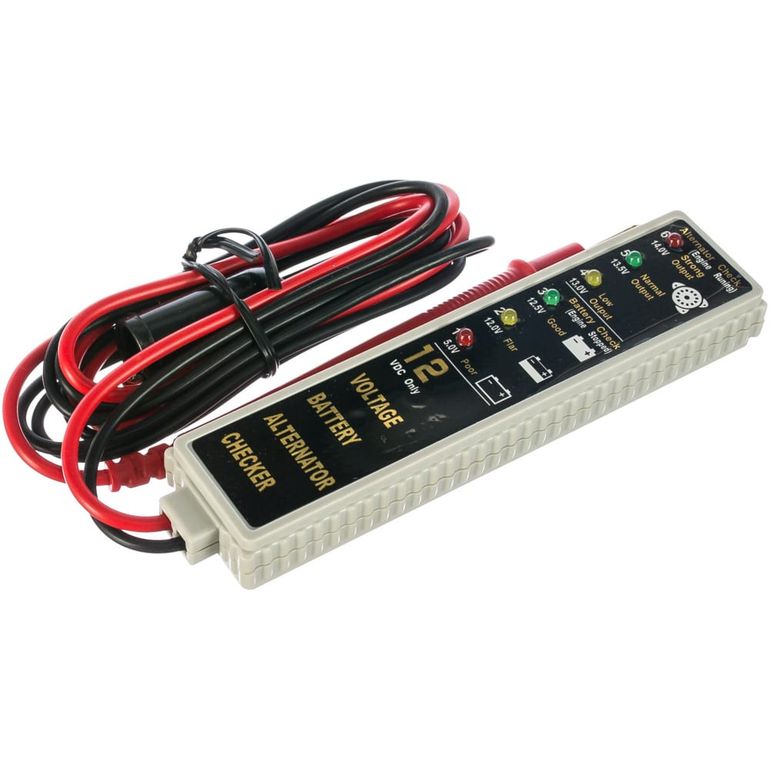
- JTC battery and alternator tester
- Browse car batteries by brand: VARTA and OPTIMA
FAQ
How long does a car battery last in Saudi Arabia?
Usually two to three years because of the heat, and it can be more or less depending on the battery type, usage and the condition of the charging system.
Can I fit a battery with higher amp-hours than the original?
Yes, if the size and terminal position fit, a slight increase in amp-hours does no harm. But don't go below the original battery's capacity.
How do I know if my car needs an AGM battery?
Look at the original battery (it will say AGM or EFB) or the owner's manual. If the car has advanced Start-Stop or regenerative braking, it most likely needs AGM.
📲 Know someone about to replace their battery? Send them the amp-hour table before they buy.
🔧 CarBoost is here for you: Shop genuine AGM batteries in our car batteries category, or book battery fitting and registration at the CarBoost Center.