Free shipping for orders over 499 riyal



Quick answer: A traditional change (removing the drain plug or pan) replaces only about 30% to 50% of the transmission fluid, because the rest stays trapped in the torque converter, valve body and cooler. A machine change (full exchange) usually replaces more than 90% of the old fluid in a single session. For most regularly serviced cars, a machine exchange with a filter change is the better choice, provided the transmission is inspected first and the manufacturer-approved fluid is used.
The automatic transmission is the second most expensive and complex mechanical component in your car after the engine. Yet drivers are divided when it comes to servicing it: some believe the myth that "transmission fluid never needs changing," while others settle for a simple drain and assume they have replaced all the fluid. In this guide we explain the real difference between the two methods, when each one makes sense, and how to avoid slipping or harsh shifts after the change.
The traditional method: draining the pan and its drawbacks
In the traditional method, the drain plug or transmission pan is removed, so only the fluid sitting at the bottom drains out by gravity. The transmission is then refilled with roughly the same amount of new fluid.
- Only a partial replacement: this method removes only about 30% to 50% of the total fluid, depending on the transmission type and design.
- Old fluid stays inside: a large share of the used fluid remains in the torque converter, the valve body and the fluid cooler and its lines.
- Dilution, not renewal: as soon as the car is driven, the new fluid mixes with the old. The mix is better than before, but it does not deliver the full performance and life of fresh fluid.
This is why some technicians repeat the drain two or three times at short intervals to reach a higher renewal rate. It is an acceptable approach, but it takes longer and costs more in fluid and time.
How does a machine transmission fluid change work?
A dedicated machine (ATF exchange machine) is connected to the transmission cooler lines, becoming part of the fluid circuit while the engine is running.
- Simultaneous exchange: the machine draws out old fluid and pumps in new fluid at about the same rate, so the fluid level and pressure inside the transmission stay stable with no air getting in.
- Near-complete replacement: the exchange continues until the outgoing fluid matches the incoming fluid in colour, which usually takes 1.5 to 2 times the transmission's capacity in new fluid.
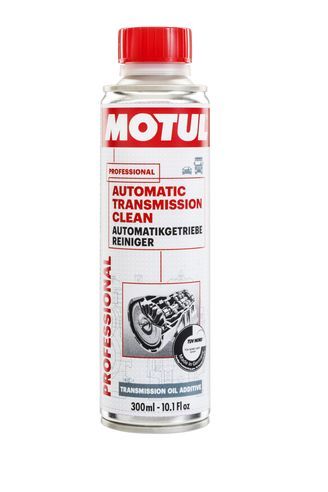
- Optional pre-cleaning: a dedicated transmission cleaner can be added before the exchange to dissolve deposits in the valve body and hydraulic passages, as long as the cleaner suits the transmission type (some CVT and DCT units should not receive any additives).
To learn about transmission fluid types (ATF, WS, CVT and DCT) and which one suits your car, read our guide to automatic transmission fluid types and change intervals.
Comparison: traditional drain vs. machine exchange
Criterion | Traditional drain | Machine exchange |
Share of old fluid replaced | About 30% – 50% | Usually more than 90% |
Fluid in the torque converter and cooler | Stays in place | Replaced with the rest of the circuit |
New fluid required | Less (as much as drained) | More (1.5 – 2× capacity) |
Life of the new fluid | Shorter due to mixing | Close to full life |
Filter change and pan cleaning | Possible if the pan is removed | Recommended with the exchange |
Best suited for | Badly neglected transmissions, as a gradual start | Regularly serviced transmissions and routine maintenance |
Does changing transmission fluid cause harsh shifts or damage?
The technical fact: changing the fluid does not damage a transmission by itself; neglecting the fluid for very long distances is what causes wear. Problems sometimes appear when the fluid is suddenly changed in a transmission that is already worn.
When fluid is neglected for a long time, the friction surfaces (clutches) wear down and the transmission may be running "on the edge." In that case, a sudden change can reveal faults that already existed, and the driver blames the new fluid. That is why:
- The colour and smell of the old fluid are checked: black fluid with a burnt smell indicates internal wear.
- Transmission control unit (TCU) fault codes are read before servicing to rule out slipping faults.
- In a badly neglected transmission, repeated partial drains may be preferable to a full exchange in one go, at the technician's discretion.
It is also worth knowing that a weak battery can cause symptoms that look like transmission faults, such as delayed shifts or limp mode, as we explained in how a weak battery affects gearbox performance.
Professional transmission fluid service steps
- Inspection and diagnosis: reading the transmission computer and checking fluid condition, and identifying the approved fluid from the owner's manual (such as Dexron, Mercon, Toyota WS, CVT or DCT fluid).
- Cleaning when needed: adding a suitable transmission cleaner and running the car for the time specified by the cleaner's manufacturer.
- Full exchange: connecting the machine to the cooler lines and replacing the fluid until the outgoing fluid runs clean.
- Filter and pan: removing the pan, cleaning metal particles off the magnet, and replacing the filter and gasket.
- Precise level setting: many modern transmissions have no dipstick, and the level is set at a specific fluid temperature; overfilling and underfilling are both harmful.
- Adaptation reset: on cars that require it, so the transmission computer relearns its shifts with the new fluid.
When should you change transmission fluid?
The interval varies by manufacturer, but driving in Saudi conditions (high heat, traffic, heavy loads and long trips) usually counts as "severe service." As a general rule, changing automatic transmission fluid roughly every 40,000 to 60,000 km is recommended, even if the manufacturer calls it "lifetime" fluid. Make sure it is part of your car's periodic maintenance plan.
Recommended products from CarBoost
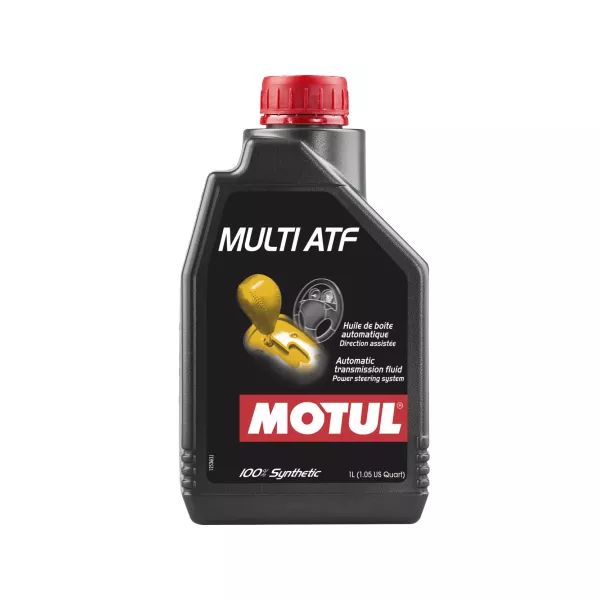
- Motul Multi ATF Fully Synthetic 1L
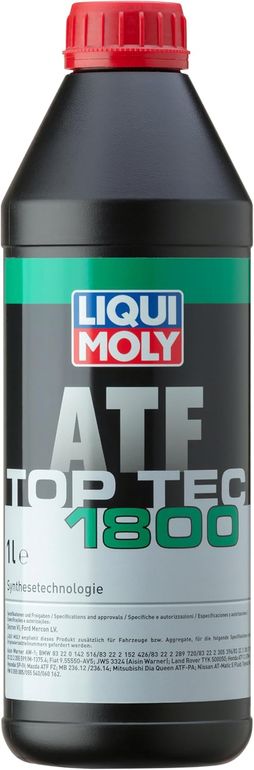
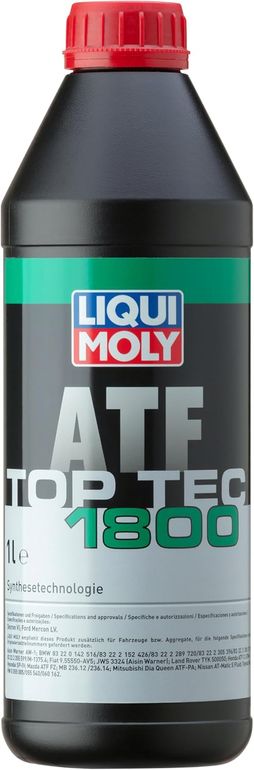
- Liqui Moly Top Tec ATF 1800 1L
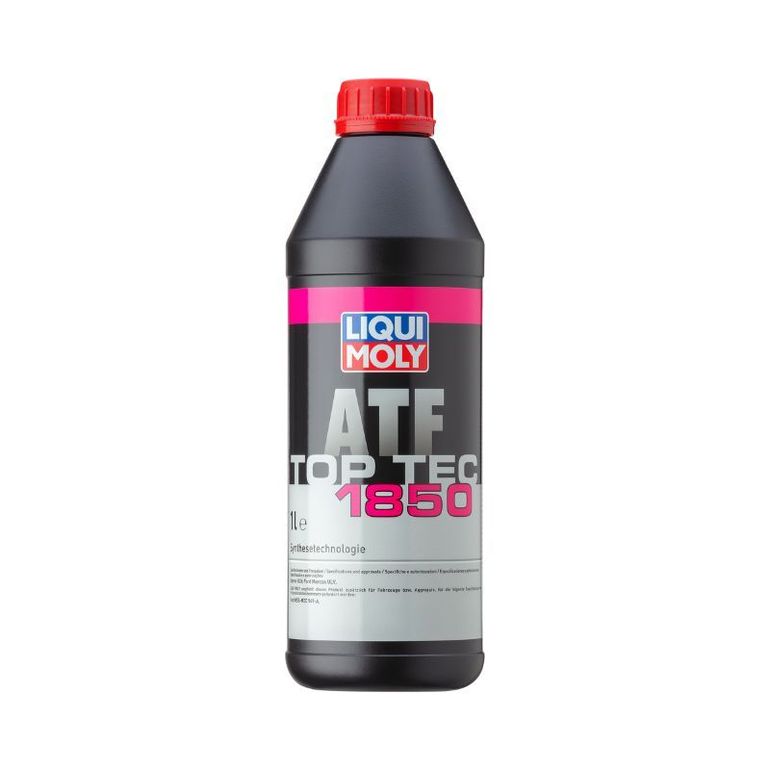
- Liqui Moly ATF 1850 ULV 1L
- Motul Automatic Transmission Clean 300 ml
- All automatic transmission fluids
- Automatic transmission additives and cleaners
FAQ
Can a machine fluid change harm an old transmission?
It does not harm a healthy transmission. But a transmission neglected for very long distances should be inspected first, and the technician may suggest a gradual change instead of a full exchange in one go.
How many litres does a machine transmission fluid change need?
Usually 1.5 to 2 times the transmission's capacity. If the transmission holds about 8 litres, you may need 12 to 16 litres for a near-complete replacement.
Can I use any ATF in my car?
No. The fluid must match the manufacturer's specification listed in the owner's manual, especially for CVT and DCT transmissions, which need their own dedicated fluids.
📲 Share this article with anyone planning a transmission fluid change before they choose the method!
🔧 CarBoost is here for you: shop genuine transmission fluids (ATF, CVT and DCT) in our transmission oil section, or book a machine transmission fluid change at the CarBoost service center.