Free shipping for orders over 499 riyal

Quick answer: Brake fluid absorbs moisture from the air over time, which lowers its boiling point and makes it prone to forming vapor bubbles under hard braking, so the pedal sinks and stopping distances grow. That is why it should be changed roughly every two years (or as your owner's manual specifies), or immediately if its moisture content exceeds 3%. Most modern cars use DOT 4 or DOT 4 LV.
When people talk about car maintenance, the focus usually goes to engine oil, while brake fluid quietly does its job and makes the real difference between a safe stop in an emergency and an accident. The braking system is hydraulic: the fluid carries the pressure of your foot on the pedal to the pistons at the wheels and multiplies it into a large force that presses the pads against the rotors. Despite its importance, it remains one of the most neglected fluids in routine maintenance.
Why does brake fluid lose its effectiveness over time?
Common brake fluids (DOT 3, DOT 4 and DOT 5.1) are glycol-based, and glycol is hygroscopic, meaning it absorbs moisture. Moisture slowly gets in through the rubber hoses, the reservoir vent and whenever the cap is opened, even if you never notice a leak. The result shows up as three dangers:
- Lower boiling point and vapor lock: as the fluid absorbs water, its boiling point drops noticeably. During repeated braking, such as descending a long mountain road or stopping suddenly on a highway in summer, the brakes heat up, the water inside the system boils and turns into vapor bubbles.
- A spongy, sinking pedal: unlike liquid, vapor is compressible, so the pedal travels further than usual and feels "soft". You may press it all the way down without the car stopping within the expected distance.
- Internal corrosion: water rusts the master cylinder, the caliper pistons and the ABS unit, and repairing an ABS unit is one of the most expensive brake repairs.
Saudi summer heat, combined with traffic and frequent braking, makes the safety margin even more important, because the brakes already run hot. Weak shock absorbers lengthen stopping distances further; read: How worn shock absorbers affect braking distance and cornering stability.
DOT 3 vs DOT 4 vs DOT 4 LV vs DOT 5 vs DOT 5.1
Brake fluids are classified by US Department of Transportation (DOT) standards and the international ISO 4925 specification, which set the minimum boiling point when the fluid is new (dry) and after it has absorbed moisture (wet). Many good products exceed these figures.
Specification | Chemical base | Min. dry boiling point | Min. wet boiling point | Typical use |
DOT 3 | Glycol | 205°C | 140°C | Older cars and some American and Japanese cars whose manuals specify it |
DOT 4 | Glycol + borate esters | 230°C | 155°C | The most widespread standard in modern cars |
DOT 4 LV / Class 6 | Low-viscosity glycol | 250°C | 165°C | Modern cars with fast-acting ABS and ESP (required by many European manufacturers) |
DOT 5 | Silicone | 260°C | 180°C | Does not absorb water; used only in some classic and military vehicles, and must not be mixed with other types |
DOT 5.1 | Glycol + borate esters | 260°C | 180°C | High-performance cars; compatible with DOT 3 and DOT 4 |
CarBoost engineer's warning: Never mix silicone-based DOT 5 with any other type; it does not blend with them and disrupts the system and its rubber seals. DOT 3, DOT 4 and DOT 5.1 are compatible, but the mixture drops to the level of the weaker specification, so it is always best to stick to the specification printed on the reservoir cap or in the owner's manual.
Is a higher specification always better?
Not necessarily. Upgrading from DOT 3 to DOT 4 is usually acceptable if the manufacturer allows it, but a car that requires DOT 4 LV needs that low viscosity so its ABS and ESP systems can work at their designed speed. Racing fluids with very high boiling points may absorb moisture faster and need more frequent changes, so they suit track use and are not necessary for daily driving.
When should you change brake fluid?
Don't wait for the brakes to weaken. The practical rule:
- By time: roughly every two years for most manufacturers, regardless of mileage, because moisture absorption happens even when the car is parked. Some manuals also list a distance such as 40,000 km; follow whichever comes first or what your owner's manual says.
- By moisture test: at the CarBoost center we use a Brake Fluid Tester. If the moisture content exceeds 3%, an immediate change is recommended.
- By color: new fluid is clear or light yellow. Dark brown fluid indicates deterioration, but color alone is not enough, as light-colored fluid can still contain a lot of moisture.
- After any repair: when replacing the master cylinder, hoses or calipers, or if air has entered the system.
To fit brake fluid changes into a complete plan, see: Why periodic maintenance is the smartest investment for your car.
Signs your brake fluid needs attention
Sign | Likely cause | Action |
Spongy or sinking pedal | Air, vapor or high moisture in the system | Immediate inspection, fluid change and bleeding |
Falling reservoir level | Pad wear (normal) or a leak | Check pads and hoses before topping up |
Brake warning light on the dashboard | Low level, handbrake engaged or a faulty sensor | Don't keep driving until you've checked |
Weak brakes after a long descent | Boiling fluid (brake fade) | Stop to let the brakes cool and use a lower gear on descents |
If this comes with steering wheel vibration when braking, the problem is usually the rotors; read: Brake rotor machining and ceramic vs regular pads.
How is it changed correctly?
A proper change is not just topping up the reservoir; it means replacing all the fluid and bleeding the air from each wheel in the order specified by the manufacturer, using a new sealed bottle, because an opened bottle absorbs moisture. Some cars with ABS and ESP need a diagnostic tool to run the ABS pump during bleeding. Note that brake fluid damages paint, so wipe off any drop immediately with water.
Recommended products from CarBoost
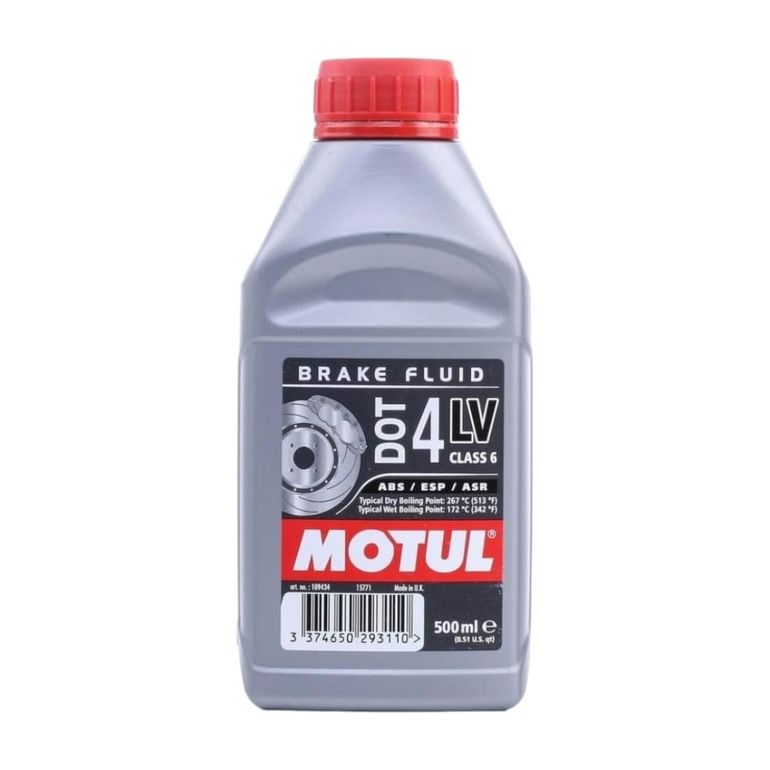
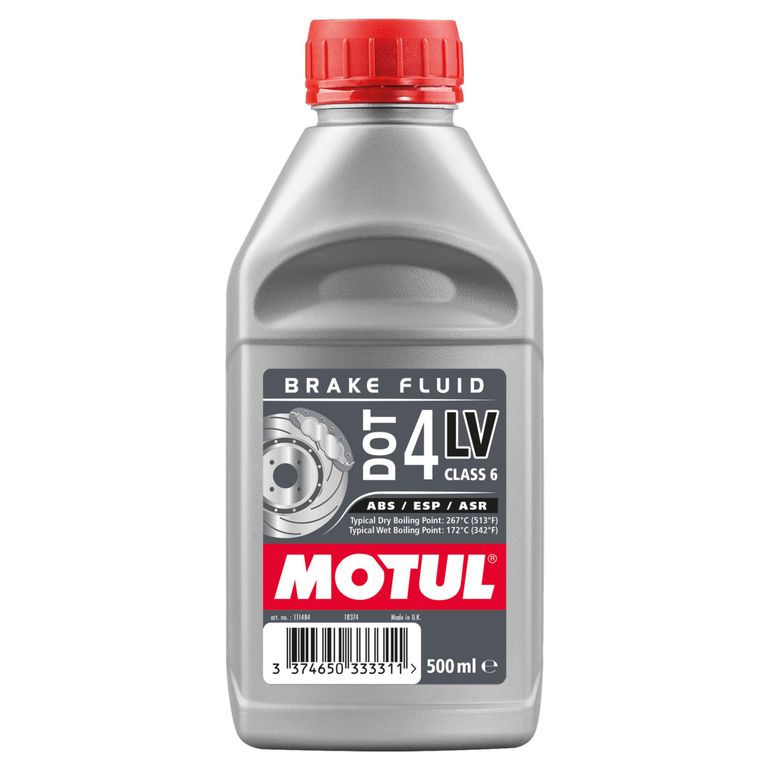
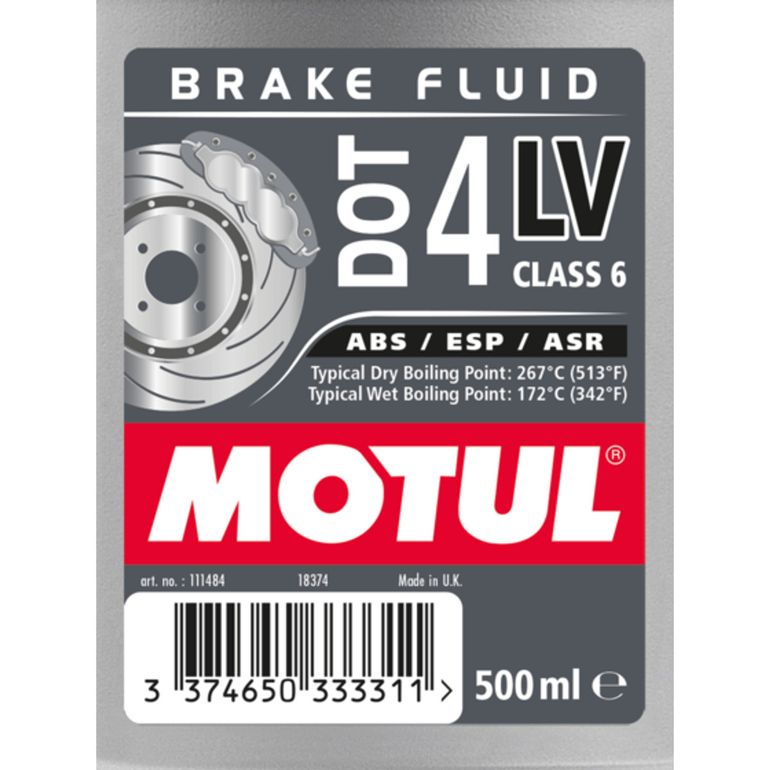
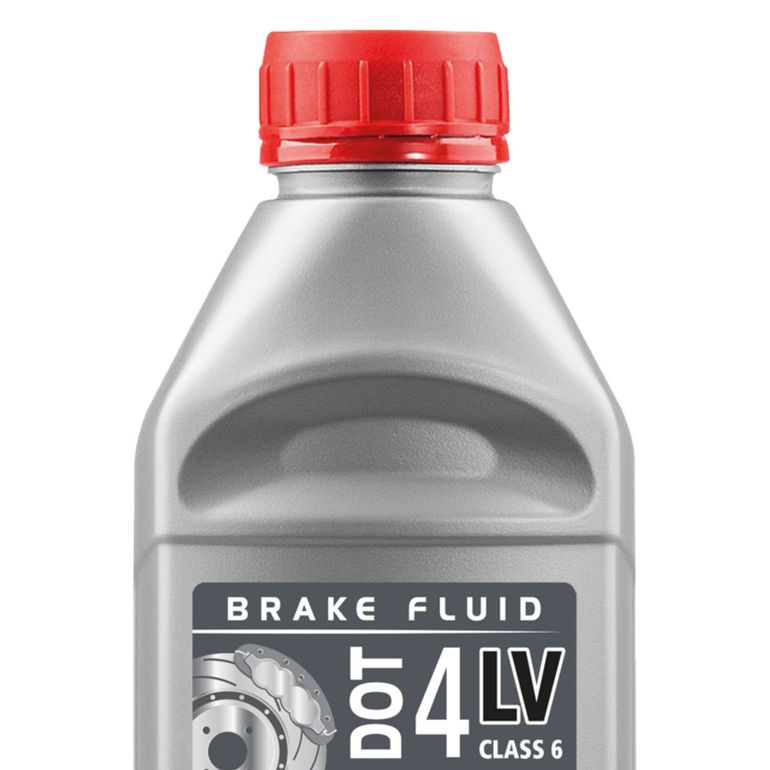
- Motul DOT 4 LV Brake Fluid
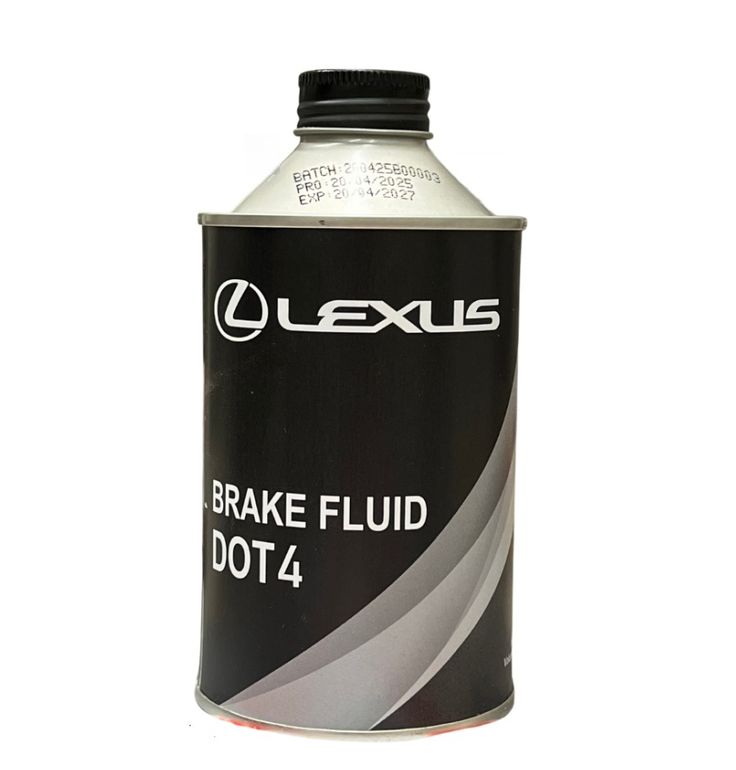
- Lexus DOT 4 Brake Fluid
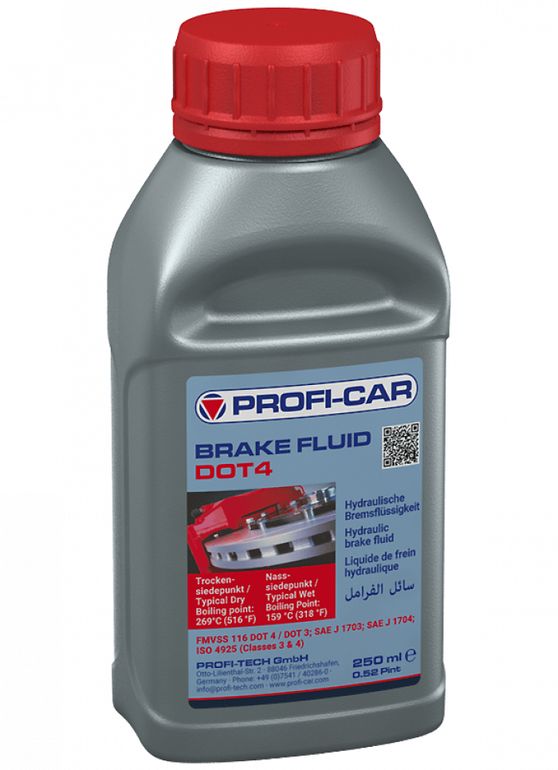
- Profi-Car DOT 4 Brake Fluid
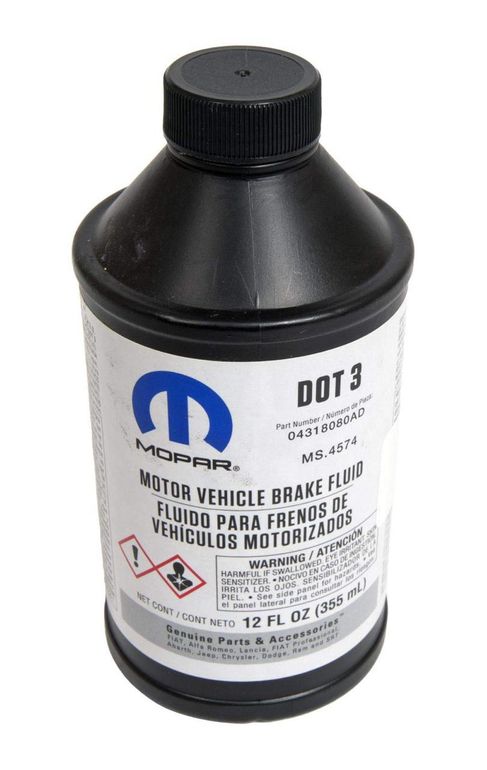
- Mopar DOT 3 Brake Fluid
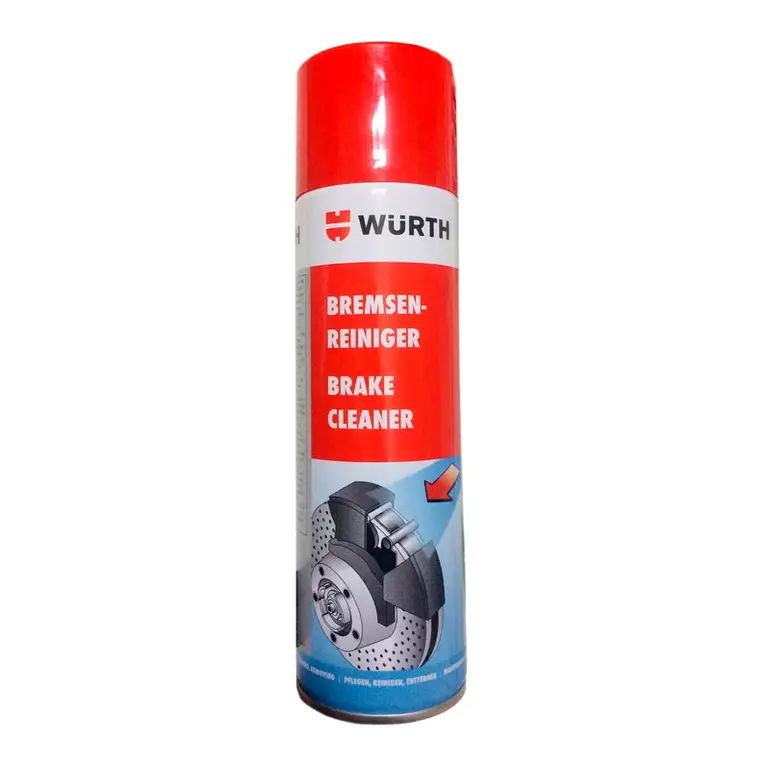
- Würth Brake Cleaner Spray
- All brake fluid products
- Brake cleaners
FAQ
Is it enough to top up brake fluid when it's low?
A slight drop is normal as the pads wear, but a clear or repeated drop means a leak that must be inspected. Topping up doesn't remove the moisture in the old fluid; the solution is a complete change roughly every two years.
Can I use DOT 4 instead of DOT 3?
Usually yes. DOT 4 is compatible with DOT 3 and has a higher boiling point, provided your owner's manual doesn't prohibit it. Silicone-based DOT 5, however, must not be used in a system designed for glycol fluids.
How long does an opened bottle of brake fluid last?
An opened bottle starts absorbing moisture, so it is best used within a short time and sealed tightly. For a complete change, always use a new sealed bottle.
📲 Share this article with people you care about; healthy brakes mean a safe trip for everyone.
🔧 CarBoost at your service: Shop approved brake fluids from the brake fluid section, or book a brake fluid check and change at the CarBoost center.